
The Czech and Slovak presence at this year’s MIPIM confirmed that both markets are shifting from the position of observers to active players in the European real estate environment. Just a few years ago, the region’s presence was perceived mainly as an effort to attract capital; today, it is increasingly asserting itself as an equal partner capable of offering projects, know-how, and investment structures.
MIPIM 2026 presented the Czech and Slovak real estate markets in a significantly more mature form. According to a working estimate based on database records, the Czechs and Slovaks were represented by approximately 210 participants and around 60 to 70 companies and organizations, including approximately 51 entities from the Czech Republic and 13 from Slovakia. What was, however, more important was the structure of participation as it was not just about some isolated companies but represented a comprehensive cross-section of the entire market. Those who came to Cannes included developers, investors, funds, advisors, law firms, architectural studios as well as technology companies. The Czech and Slovak presence therefore did not appear as a collection of individual brands, but as a picture of a market that covers the full process of the origin and functioning of modern real estate – from investment deliberation through design and financing to operation, sales, and digital innovation. What also became clear was the fact that the era when the Czech Republic and Slovakia were seen primarily as emerging markets is over. Both are now increasingly acting as exporters of know-how, not only through technology, but also through development, architecture, investment structuring and professional services.
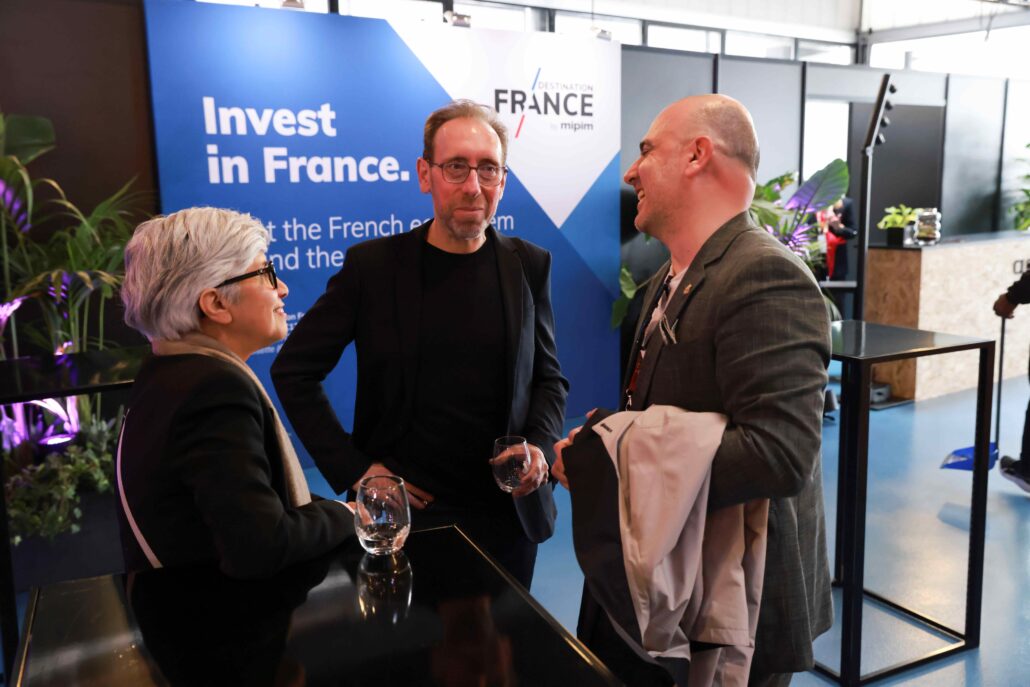 Various segments were represented
The most visible sectors were the sectors of logistics and industrial development. CTP Invest stood out strongly, as did Accolade s.r.o., an active co-exhibitor of the city of Ostrava; in the broader regional context, companies such as Panattoni, P3, and Prologis also played an important role. And it was this particular segment that clearly demonstrated that the Czech and Slovak markets are far from peripheral in the European context. On the contrary, logistics and industrial real estate belong among their strongest pillars today.
The investment and ownership segment of the market was also strongly represented, alongside with consultancy and transaction companies, law offices, architectural studios, and top-class technology companies. Their presence reminded of the fact that a mature market is built not only by those who construct or invest, but also by those who design projects, secure them from contractual and legal point, and those who develop new solutions and professional know-how.
Ostrava as a respectable representative
The city of Ostrava and its co-exhibitors deserve special recognition. Ostrava once again proved itself to be an enlightened and forward-looking representative of public sector who understands that MIPIM is not just a prestigious event, but also a working platform for investment, partnership and international visibility. This was also reflected in the active presence of the city’s political leadership and top management, who presented the city, took part in discussions, and sought particular opportunities for the city’s development. Apart from the city, the key contributors, particularly Accolade, BOGLE ARCHITECTS, CHYBIK + KRISTOF ARCHITECTS, PRK PARTNERS ATTORNEYS AT LAW, and Kami Profit also played an important role in this presentation. Ostrava did not act as a decoration at MIPIM, but as a city that knows exactly why it is there.
This presentation also reminded of the essence of MIPIM, which does not merely represent completed projects; it is a platform where investors, developers, architects, lawyers, advisors, and technology companies meet at the highest level, and where many projects, as well as their initial concepts and/or visions, are born. In this sense, MIPIM reflects architecture, development, financing, and related services at a high European standard.
Compared to our neighbouring countries, there is still room for improvement in the presentation
In one respect, however, this year’s Czech – and to some extent Slovak – participation was clearly asymmetrical compared to Germany, Poland, and Austria. With the exception of the aforementioned Ostrava, there was a lack of stronger institutional presence from the public sector. While Ostrava stood out as the main representative from the Czech public sphere, the Polish presence was much broader and more systematic. Those officially represented included cities such as Warsaw, Poznań, Kraków, Łódź, Wrocław, and the Pomerania and Silesia regions. Germany’s footprint was similarly visible on both city and regional levels: the Hanover region and the city of Hanover were presented jointly and were also part of the official German Cities and Regions Pavilion, alongside Leipzig, the Rhine-Neckar region, the Ruhr metropolitan area, and Duisburg. There was also a separate Berlin/Potsdam platform. Based on official materials, Austria’s national pavilion brought together 18 exhibitors and explicitly included St. Pölten among its long-term participants.
This highlighted untapped potential in the Czech and Slovak public sectors compared to the private sector. Representatives of state development agencies, ministries, and embassies were notably absent.
An important complement to the overall picture includes data showing that for both the Czech Republic and Slovakia, MIPIM was significant not only due to their direct participation, but also because of strong interest from international attendees. Both markets were therefore prominently present in Cannes not only through their own companies and managers, but also as investment destinations closely watched by a wide range of global players.
The real strength of this year’s Czech and Slovak presence lay in the fact that it was not limited to a single segment or a few isolated brands. The market was presented in its full breadth and no longer acts merely as a local recipient of capital, but as an active partner capable of offering projects, know-how, structure and ambitions.
From the perspective of Business Network CZ s.r.o., the local representative for the Czech Republic and Slovakia and organizer for RX France, this may be the most accurate definition of this year’s trade fair. The Czech and Slovak presence at MIPIM 2026 demonstrated that both markets are no longer just present on the European stage. They are also visible, relevant, and in many segments genuinely respected.
One final sentence for those still hesitating: today’s question for cities, regions, developers, funds, and consultancy companies is no longer whether to attend MIPIM, but whether they want to remain merely visitors or actively join those who help shape relationships, themes, and projects of the years to come.
Milan Stříteský / Photo: MIPIM – RX France
Milan Stříteský is the Director of Business Network, s.r.o., the official representative of the MIPIM Trade Fair for the Czech and Slovak Republics, and has been active in the mar ket for over 20 years