
Over the next two years, or by the end of 2028, the development company JRD plans to launch the construction of residential projects that will bring approximately 1,600 new apartments to the Prague market. This is essentially the same number of homes the company has built throughout its entire 23-year history.
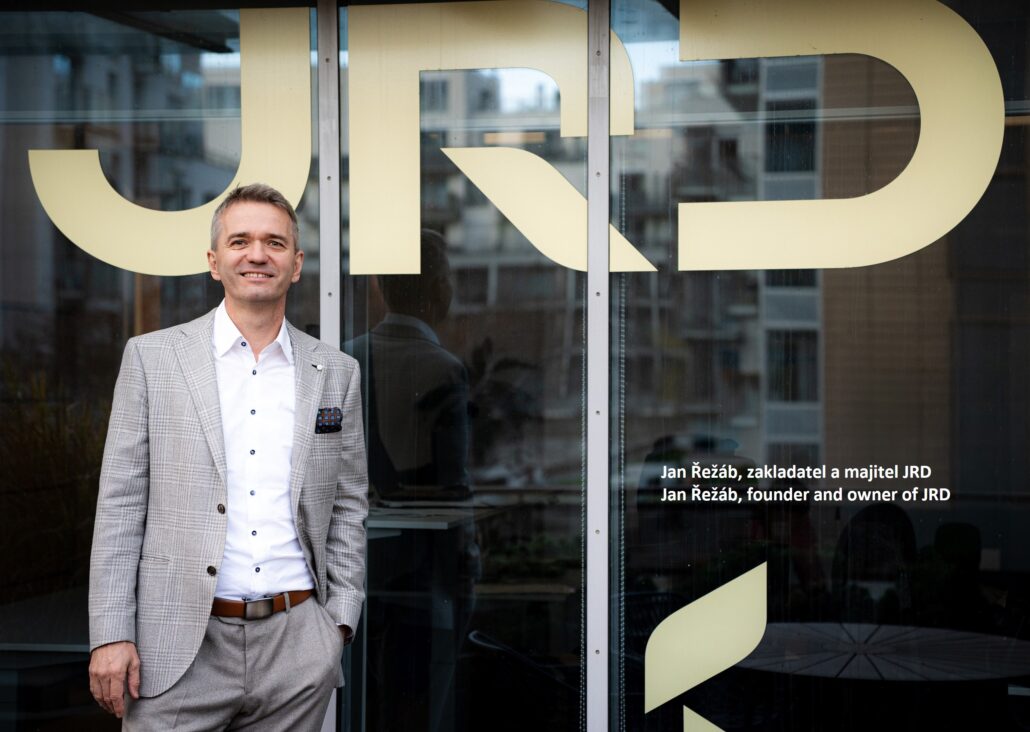 JRD is currently developing three large-scale residential projects in Prague, with another five set to follow by the end of this year. What innovations in healthy housing is the company preparing for the near future, and how challenging is it to maintain a leadership position in sustainable construction? And with what expectations did JRD launch its qualified investor fund last year? We asked Jan Řežáb, founder and owner of JRD.
What changes in project management has JRD had to undergo, or will it need to undergo, in order to manage the construction and sale of nearly two thousand apartments within a certain period of time?
The number of our projects has grown gradually and over the past ten years it has remained more or less similar. Their visibility, however, only increases as building permits approach, when we launch sales and construction. The projects whose construction and sales we want to start over the next two years have been in preparation for a very long time. After all, the permitting process alone in Prague usually takes us five to seven years. What we now need to strengthen significantly is our ability to sell such a large volume of apartments — not only from a sales perspective, but also in terms of marketing and other supporting processes.
JRD has long been perceived as a regenerative developer. The construction of energy-passive buildings has essentially been a matter of course throughout the company’s existence. How do you manage to maintain your position as an industry leader?
Within our company, the product management department plays a very important role – both in its general setup and in the environmental area, where we strive to be a leader and benchmark-setter for the industry. This is one of the key assignments I give the company and its management as the owner.
It is not always an easy path, and not only during periods of crisis, which the market as such goes through from time to time. Nevertheless, JRD’s success rests on the know-how we have built and continue to develop, as well as on consistently passing this know-how on to colleagues who join the company.
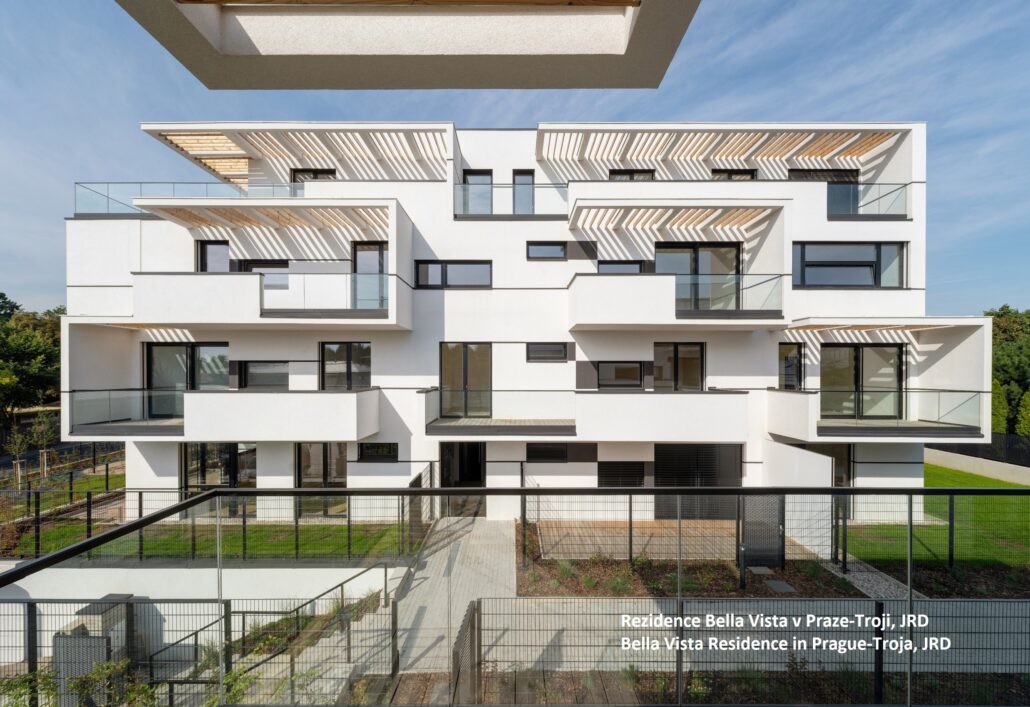
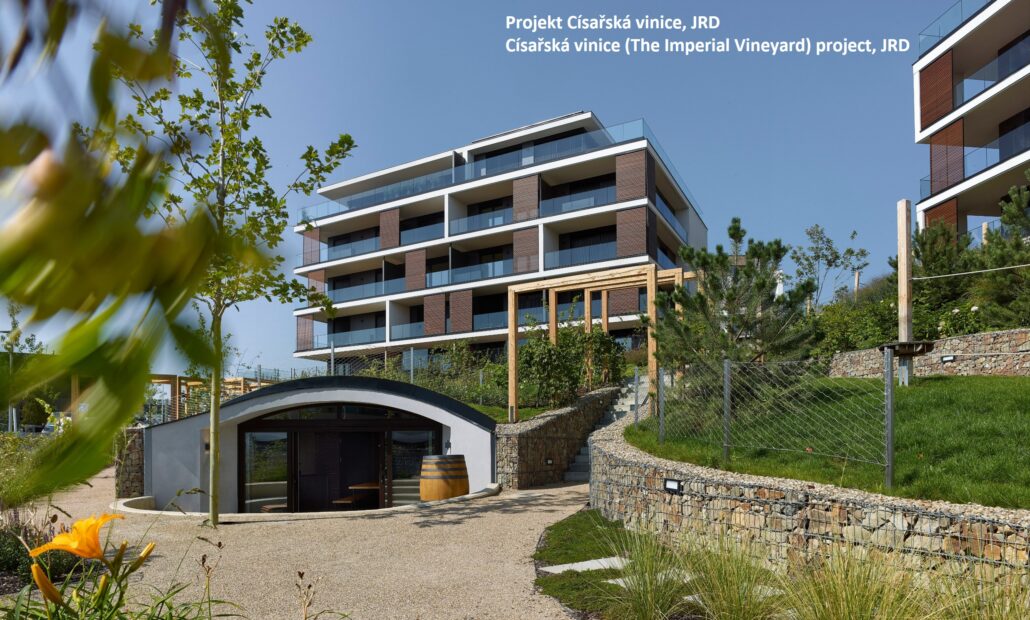 JRD’s credo is to create healthy and energy-efficient homes. In all new residential projects, you offer features such as apartment cooling as standard. Do you see this as a necessary response to climate change, or has this approach resulted from the demands of a new generation of buyers?
Cooling of residential spaces is one of the greatest technical challenges in construction. It is, of course, also driven by progressing climate change. In several projects, we have implemented ceiling or underfloor heating and cooling using so-called activated concrete core technology. From our perspective, this form of cooling is more beneficial for health. It ensures quality sleep even on hot summer nights, without draughts or noise.
 What led you to incorporate into a residential project a technology that is more commonly used in premium office buildings?
Behind this is my assignment for the entire JRD Group, for all divisions and projects, and for all directors and project managers: to keep pushing forward the fields in which we operate. The activation of the concrete core, whether in the ceiling or the floor, is probably the most comfortable solution for low-temperature heating and, above all, cooling in residential spaces. The enormous advantage of this solution is that it requires only a very small temperature difference between the medium supplied to the system and the indoor air — just a few degrees Celsius. This becomes especially apparent with cooling, when there is no air blowing on you. The system maintains the temperature set for each room with an accuracy of 0,5 °C.
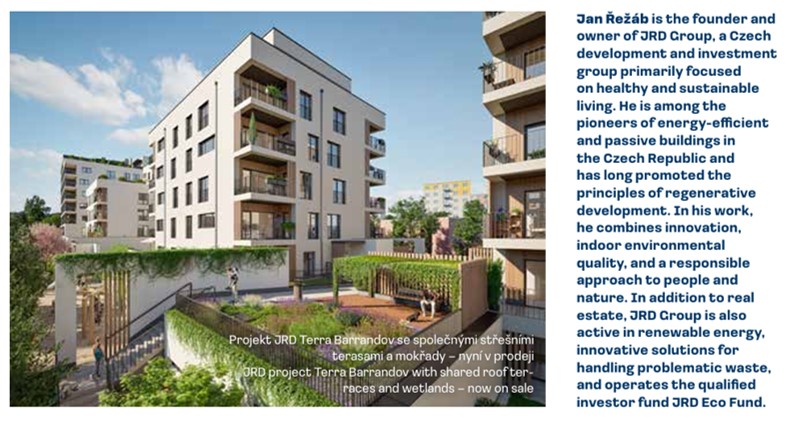
One of the projects you are currently working on is Terra Barrandov. This apartment building will include a wetland roof designed to purify greywater. Is this an experiment, or is it a direction JRD intends to follow in all future projects?
We see the wetland roof in the Terra Barrandov project as a practical way to reduce water consumption, not as a one-off experiment. In another of our projects currently in preparation, we are also planning a root zone wastewater treatment system. However, we always assess whether innovative technologies bring genuine benefits. In residential construction, this depends on the size of the project, the amount of greywater produced, and other technical parameters. If a project meets the right practical and technical conditions, we want to continue developing these solutions.
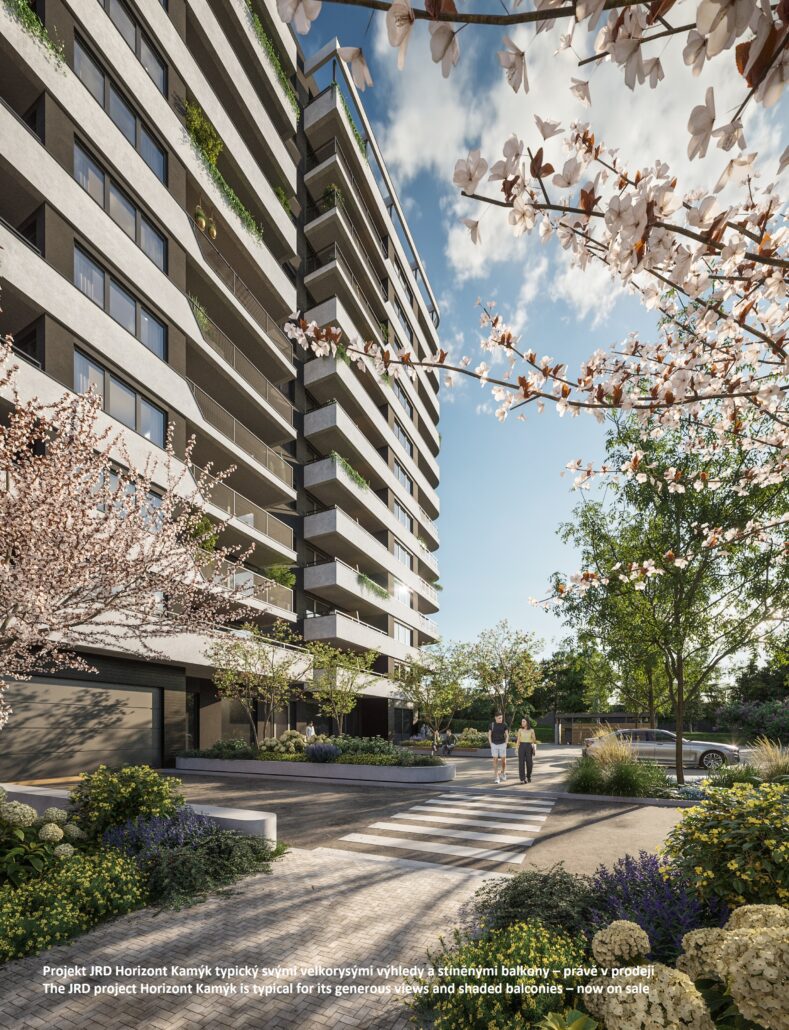 Among Prague urban planners, architects and developers, urban densification and the city of short distances are major topics. How important is this parameter when you decide on acquiring land for new development?
It is naturally one of the key factors in our decision-making. Déčko Libuš is a good example: the project is planned near the future Metro D station and the new tram line. Another example is Viadukt Smíchov in Prague 5, where we would like to extend and restore the nearby cycle routes. As a residential developer, JRD has been implementing dozens of large residential buildings for several years, most comprising more than one hundred apartments. We strive to build our projects in locations with good infrastructure, near metro or tram stops, and in places where people can easily reach their everyday destinations on foot or by bicycle within a short time.
In which area would you never make a compromise?
For a project to be developed under the JRD brand at all, the company’s management has a clear instruction from me as the owner: it must meet certain environmental criteria. This sets a clear framework for our choices. I also require every JRD project to advance the residential development industry in the environmental field.
In addition to its activities in development, energy and waste processing using plasma gasification, the JRD Group has added another ‘item’ to its portfolio. Last September, you became the first Czech developer to launch a qualified investor fund – the JRD Eco Fund. Why?
The fund was created in response to demand from those who have known JRD for a long time and have followed its development. People want to invest their savings in a meaningful way. Sustainable and healthy housing projects are investments in the future and contribute to positive change.
Which projects currently make up its portfolio?
We include in the portfolio projects that have already completed a substantial part of the permitting process. At the moment, it consists of the aforementioned Viadukt Smíchov and Déčko Libuš projects. Later this year, the Ecocity Malešice project will be added, along with others.
How does the JRD Eco Fund differ from other real estate funds?
Primarily through its investment model. Most real estate funds purchase completed buildings and generate returns from rent. The JRD Eco Fund invests in the development of residential projects within the JRD Group and participates in the entire process of their creation and sale. As a result, it does not generate returns only from ongoing income, but also from a share in project profits, including excess returns, which increases its return potential. Another distinctive feature is its emphasis on healthy housing. The fund holds Light Green certification and invests exclusively in our projects – that is, in energy-efficient and environmentally responsible developments where ESG is at the core of the strategy. Compared with traditional funds, our fund is closer to a private equity investment in development than to a classic rental-income model.
What is the main driving force for you and your company?
I believe that not only for me, but also for my colleagues, it is part of my personal motto: to make a positive contribution to society.
Jana Hrabětová / Photo: JRD Archive