
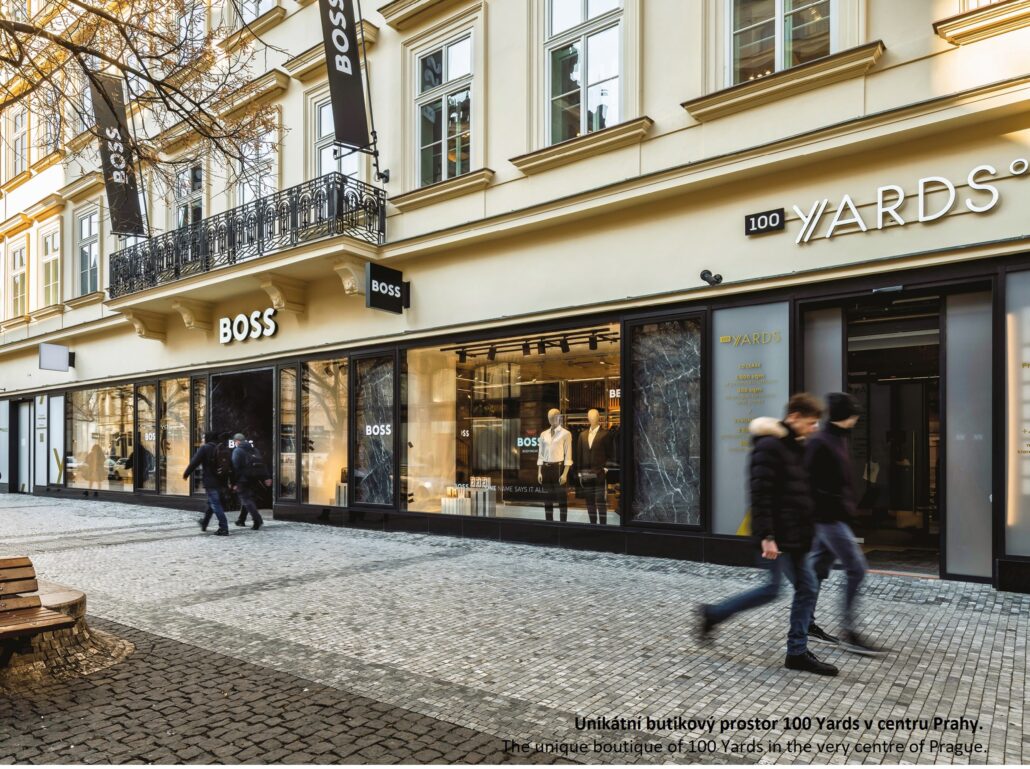
The year 2025 brought a number of significant achievements in the retail sector. The most significant of these include the expansion of the Westfield Shopping Centre at Černý Most in Prague, the metamorphosis of the Grand Department Store in Pardubice into a design shopping centre and the combination of three historic buildings in the centre of Prague into the unique boutique of 100 Yards. From the perspective of the investment market, it was the acquisition of the Palladium Shopping Centre acquired by the Czech real estate fund REICO for their portfolio that happened to become the event of the year.
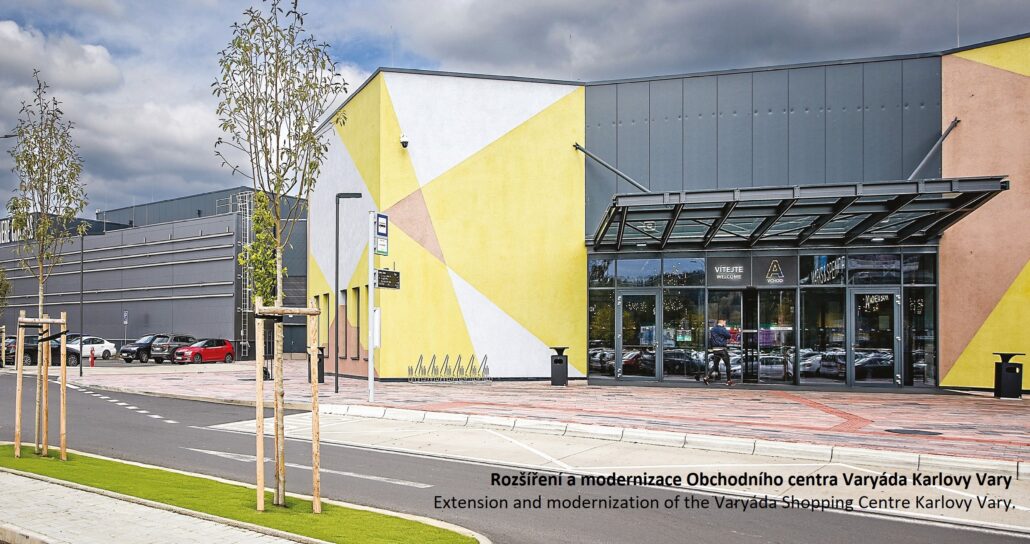 Despite the fact that the construction of completely new shopping centres on greenfield sides has almost ceased in the Czech Republic, the number of retail premises increased significantly last year. This was due to the expansion of existing centres and a record-breaking boom in retail parks. According to a survey by CBRE, over 140,000 sq m of premises were completed in retail parks in the Czech Republic last year alone, and the Czech Republic has become the second most important market in the CEE region in this segment. Only Poland surpassed us. And how will retail be doing this year?
Iconic department stores…
Although the construction of some of the long-planned shopping centres may finally get underway this year, developers and investors are now focusing mainly on buildings that are under construction and on ongoing reconstructions. However, just like last year, even these include some ‘significant names’: the Prague department store Kotva, an icon of brutalism (Generali Real Estate), the multifunctional centre Dornych (CRESTYL), which will bring over 24,000 sq m of retail space to Brno, or the Pernerka Galerie (Redstone) in Pardubice. Once completed in the fall of 2028, it is expected to become the largest shopping and social centre in East Bohemia. Šantovka Mall should be built in some time on the banks of the Mlýnský Stream in Olomouc as part of the Šantovka District project in the neighbourhood of Galerie Šantovka under the leadership of the same investor. However, the Redstone Group is not only leaving their imprint within the Olomouc region. The Myslbek Passage in the centre of Prague and the Flora Shopping Centre near the underground station of the same name in Vinohrady are awaiting significant renovations and modernizations. The group became their owner in early 2025.
 … as well as new retail parks
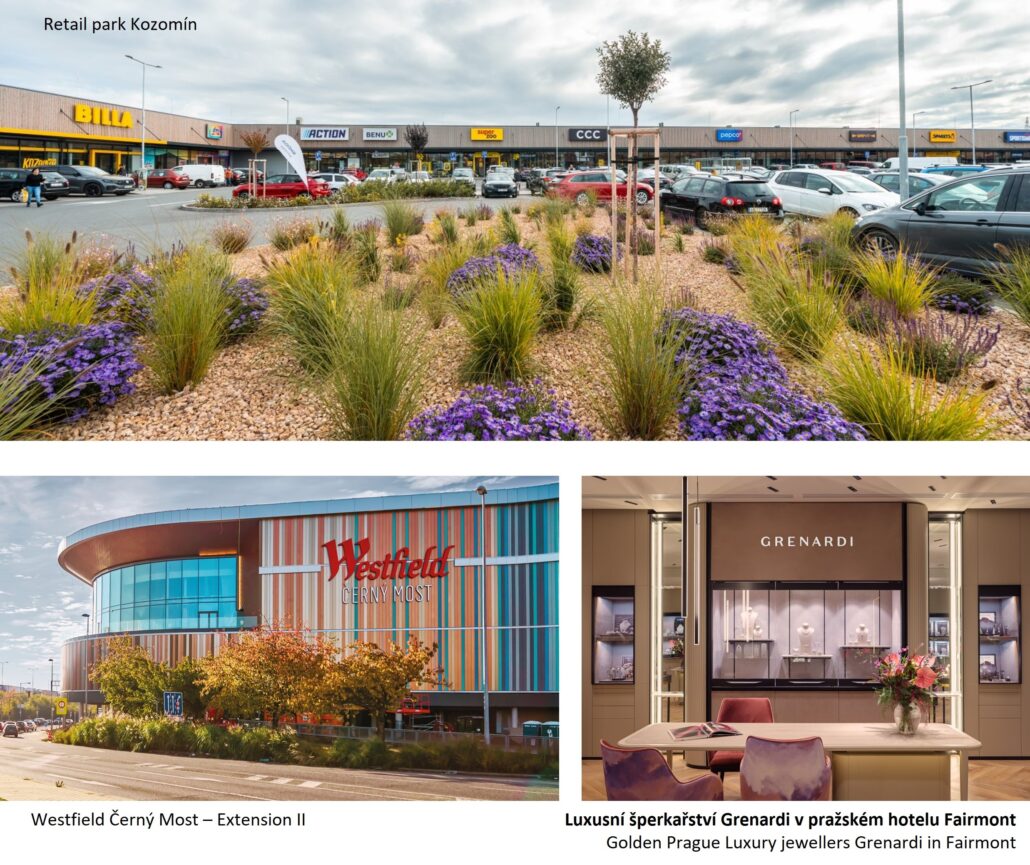
Based on CBRE’s forecast, the construction of retail parks will, once again, dominate the market in terms of new construction this year. The project that has already significantly expanded shopping options outside large towns over the past year is the Kozomín Retail Park (PORTIN invest). It offers more than two dozen business units on an area exceeding 14,000 sq m and is currently one of our largest retail parks. When under construction, the investor also paid great attention to the integration of modern ecological solutions.
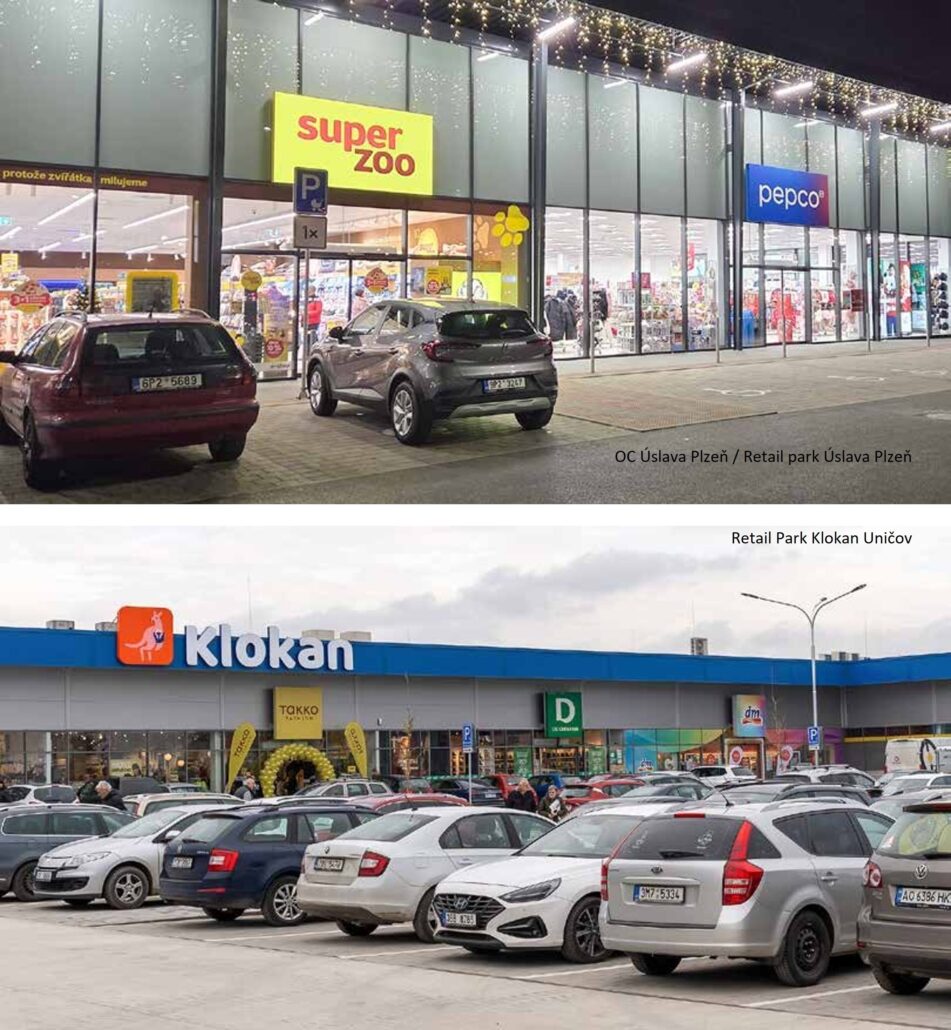
And it is the increasing emphasis on sustainability in the form of photovoltaic panels on the roof, rainwater retention tanks, or facades with natural elements that are changing the established standards in the construction of these shopping parks. The Slovak development company KLM real estate is also betting on ‘green’ in their projects. After the opening of the first part of the OC Klokan in Lipník nad Bečvou, they are planning to complete the second stage of this park this year. During this year, they should also start construction in several medium-sized towns, thus following up on recently completed projects in Uničov, Úpice or Bystřice pod Hostýnem. As for the next period, they are getting ready for expansion to other parts of the country – Mladá Boleslav and Karlovy Vary.
At the beginning of spring, the PORTIN Group is preparing to open their new retail park – this time in Třeboň. And they are gradually starting construction work in several other South Bohemian towns – in Vodňany, Hodějovice, Prachatice or Protivín.
The development group InterCora is one of the most important players in the domestic market in the field of retail parks. At the end of the year, they completed and opened the OC Úslava, a construction that aroused great public interest as the centre was built on the site of the infamous Pilsen brownfield, which used to be nicknamed the ‘glass hell’. However, OC Úslava is ‘only’ the first stage of an extensive project that InterCora is behind in the given area. “We will continue with the next stage, a multifunctional building with shops, offices and apartments. It is currently in the project phase. The third stage will comprise three apartment buildings,” says Ivan Hlaváček, Managing Director and partner of InterCora, about the future of the place near the Úslava River. In the retail park segment, InterCora is, amongst others, also working on expanding the locations in which they already operate.
 Saller Group, the current market leader in terms of ownership of rental space, is also engaged in the expansion and modernization of retail parks and expansion into smaller towns. The group’s portfolio includes, for instance, Forum Pardubice, S1 Centre Liberec, S1 Centre in Ostrov nad Ohří or S1 Louny.
The real estate investment group Fidurock also targets retail parks. At the beginning of this year, they announced the founding of a qualified investor fund (FKI) Fidurock Retail Parks Fund SICAV, into which they will put all of their 14 retail parks in the Czech Republic and Slovakia. These include projects in Trutnov, Tábor, Mladá Boleslav, Liberec, Choceň, Milevsko, Staré Město, Piešťany and Trnava. “Retail parks belong to the most stable types of commercial real estate in our country as well as abroad. They have a long-term growing value supported by current retail trends, such as interest in discount stores and international brands, which is reflected in the growth in attendance and sales,” David Hauerland, Managing Director of the Fidurock Group, lists the advantages of retail parks. “We purchased the first retail parks into our real estate portfolio ten years ago and today, we are one of their largest owners in the Czech Republic,” adds D. Hauerland.
Czech Republic as a key destination
The current strategies and challenges of retail chains in Central and Eastern Europe, including the Czech Republic, were mapped by CBRE’s CEE Retail Occupier Survey. It was conducted in the final quarter of 2025, and its aim was to find out what new expectations and strategies retailers have in the current economic and geopolitical environment. The survey was attended by prestigious international brands throughout all segments – from clothing and footwear to health and beauty to consumer electronics and home appliances. The main finding was that a total of 49% of respondents are planning to expand their brick-and-mortar store networks in the coming period. Instead of entering new countries, however, the expansion will focus primarily on markets where the brands already operate. The domestic market is also set to expand its retail network.
“The Czech Republic remains a key destination for international retail brands entering the CEE region,” says Jan Janáček, Head of Retail Sector and Retail Leasing at CBRE. He adds that current expansion strategies are heavily focused on retail parks. As for shopping malls and high streets, brands prefer established key locations over new, emerging ones. Transit hubs such as airports, train and bus stations, and fashion outlets are currently less popular among retailers. However, many of them keep them on their list for possible future expansion.
Chris Sheils, Head of International Business Development at Arcona, is also convinced of the growing importance of retail parks: “Retail parks anchored by a food tenant have, in recent years, proven to be a strong and stable segment thanks to inelastic consumer demand, quality tenants and locations firmly integrated into local communities. We expect this trend to continue. At the same time, however, we expect growing investor interest in smaller retail parks as consumers increasingly prefer easily accessible, everyday shopping formats within their region. These projects represent an attractive combination of defensive characteristics and long-term growth potential for investors.”
 AI in the service of retail
One of the interesting trends captured by CBRE’s CEE Retail Occupier Survey is the implementation of artificial intelligence. “More than 71% of the brands surveyed use it primarily for marketing and personalization, but also for analysing customer preferences and optimizing supply and warehouse processes,” says Jan Janáček, describing the results of one part of the survey.
According to Miriama Malewska, Deputy Director of Shopping Centre Leasing at CBRE, artificial intelligence also has the potential to fundamentally transform the customer experience in brick-and-mortar stores. “Imagine a smart mirror in a booth that automatically suggests a different size, alternative colours or complementary pieces of clothing that match the selected products. Similarly, AI can also optimize inventory in real time based on current demand or personalize offers directly in the store according to the preferences of a specific customer. However, these technologies so far remain the exception rather than the rule, and their wider use will depend on the willingness of retailers to invest in digital transformation,” notes M. Malewska.
New tastes and luxury for the Czech Republic
Forty foreign brands entered the Czech market last year. As shown by a regular survey by Cushman & Wakefield, this number has remained stable in recent years. The only exception was 2024 with 47 brands. And just like in the previous year, the F&B (Food & Beverage) segment was the most prominent last year. The most significant entry was the long-awaited fast-food chain Five Guys with their first branch in the Prague department store Máj. The dean&david chain that specializes in healthy food, and the Koykan restaurant with Mediterranean cuisine also opened their first place there. The Czech market was also enriched with this cuisine by the fine dining restaurant Seven North, which was opened in the SiR Prague Hotel next to the Dancing House. The Czech market was further entered by Piano Bar with live music in the Savarin Palace in the centre of the metropolis and Wundermart opened the first branch of their minimarket concept within the Prague Hilton Hotel. Most of the new brands, eight of them in total, came to us last year from Germany. Italian and American brands were also prominently represented – six from each country. “2025 confirmed that the Czech market is still attractive for new brands and resilient to economic fluctuations. We see an increasingly significant shift towards the F&B segment, which best responds to changing consumer habits. Today, more than ever, people look for an experiential concept of shopping, i.e. a combination of gastronomy, entertainment and a premium environment. This trend motivates mall owners and developers to expand their offer with new restaurant and bar concepts,” says Jan Kotrbáček, international partner and Head of the Retail Leasing Team for Central and Eastern Europe at Cushman & Wakefield.
The arrival of a record-breaking number of new brands, five in total, was recorded last year in the luxury segment. This is mainly due to the opening of the Fairmont Golden Prague Hotel (formerly the InterContinental Hotel) in Pařížská Street, which attracted three luxury jewellery houses – Grenardi, Damiani and Pasquale Bruni. The niche perfume brand Nicolaï opened a store in Široká Street, and Chanel Fragrance and Beauty in Na Příkopě Street.
“Following the example of Western Europe, Czech retail is changing from a place of purchase to a place of experience, community and emotional connection with the brand. This development brings enormous potential not only for international players, but also for local concepts that can offer individuality and authenticity,” says Jan Kotrbáček. And he adds that the future of the Czech market lies precisely in this combination.
Jana Hrabětová