
Pascal Eveillard from Saint-Gobain Group, is one of the foreign speakers at the upcoming 10th edition of the Climate-Resilient Buildings for a Sustainable Future conference, organized by the Czech Green Building Council at the Stages Prague Hotel on 18th March, 2026.
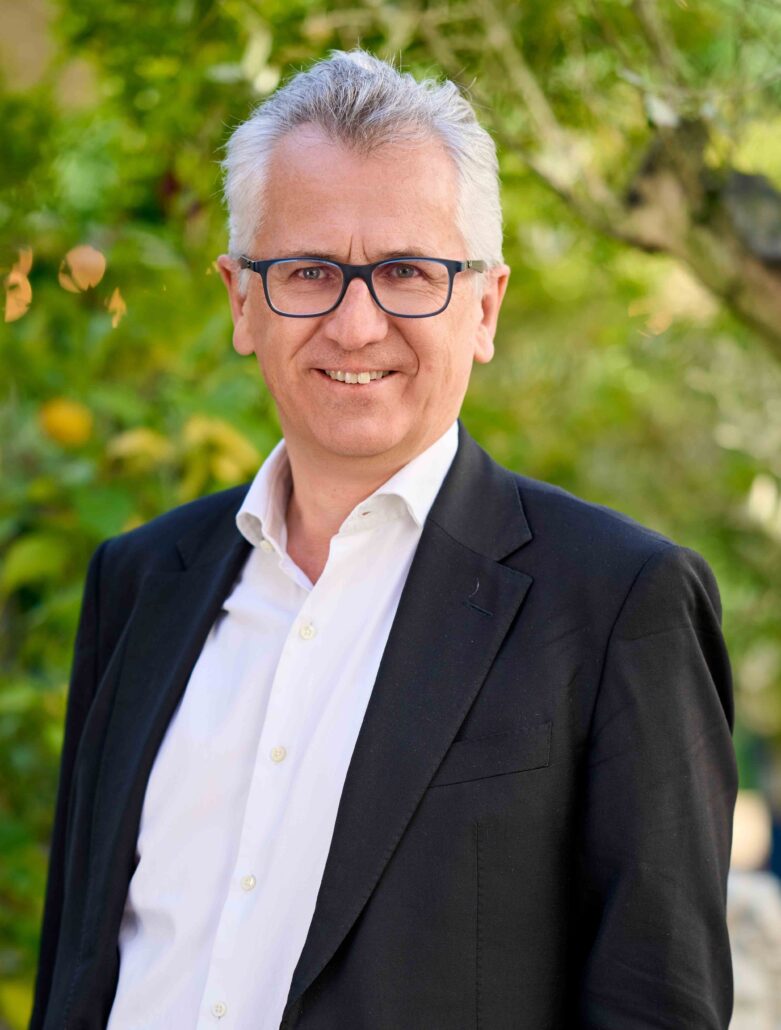 Before the conference, we asked Pascal Eveillard about the current situation in the field of sustainable building development.
What are the rules in the Saint-Gobain Group in the field of sustainability? How do they reflect the conditions in each country where the group operates?
We have an ambitious and collective roadmap designed to guide the entire Group toward sustainable and profitable growth. It builds on our purpose – Making the world a better home, our vision to be the worldwide leader in light and sustainable construction, our achievements and our commitment to transforming the construction sector for the long term. Major trends – global demand for construction, climate adaptation and protection of natural resources – are profoundly transforming our world. These trends open up an immense field of growth opportunities and an invitation to rethink construction and renovation: building more, better and faster, fostering resilience and adaptation of buildings and infrastructure, moving towards sustainable construction that is low-carbon and engaged in the circular economy. Lead & Grow 2030, our ambitious strategic plan, provides responses to these challenges. Implemented in 80 countries, supported by a strong multilocal organization and relying on a unique portfolio of sustainable and well-suited solutions, Lead & Grow 2030 helps us lead the transformation of the construction sector, while powering our profitable growth ambition.
Pascal Eveillard joined Saint-Gobain in 2000. He is the Group’s deputy VP for Sustainable Development and the Director for Sustainable Construction. He is also involved in organizations such as the World GBC or the WBCSD. Pascal is the vice-president of Eurima, the European association of mineral wool insulation manufacturers, the President of Construction Products Europe (CPE) that represents the interests of all European construction products manufacturers and a board member in EcoPlatform, an association aiming for mainstreaming life-cycle assessments for buildings.
During covid, some plans were suspended or slowed down. On the other hand, it also brought space for reflection and analysis of the set plans. What was to the outcome for you?
In 2020, Saint‑Gobain formulated and unveiled its corporate purpose “Making the world a better home”. The formulation of the purpose in 2020 occurred in a strategic, participatory, and transformative context for the Group. The purpose was the result of an extensive international engagement process: about 15,000 internal contributions and more than 600 workshops worldwide, including inputs from external stakeholders such as investors, associations, partners, and opinion leaders. This reflects a deep collective reflection on the company’s identity, values, societal role, and long-term direction. Internally we described 2020 as a moment charnière (turning point) for the Group: The COVID‑19 crisis accelerated transformation needs. The company was implementing a broad transformation plan. The purpose helped anchor the Group’s direction amid uncertainty. The purpose served as a compass. It embodied the ambition to contribute positively to people’s lives and the planet. Also in 2020, a Corporate Social Responsibility Committee was created within the Board to reflect the new strategic emphasis. This marked the purpose as more than an inspirational slogan—a central part of corporate governance and long‑term strategy.
 How is Europe managing to reduce its carbon footprint compared to the rest of the world?
Europe is managing to reduce its carbon footprint through a combination of legally binding climate laws, ambitious emission reduction targets, structural changes in the energy mix, massive renewable energy deployment, and stringent carbon pricing mechanisms. These measures stand in contrast to global trends, where overall emissions continue to rise and commitments are often voluntary or inconsistently enforced. Europe’s systematic approach, decades-long momentum, and robust governance mechanisms explain why the continent is achieving sustained reductions while much of the world is not. The EU is the only major emitter showing a continued trend reversal, while other major economies see stable or rising emissions.
A lot has been written about the benefits of sustainable buildings. What do you consider to be the most important aspect?
The biggest advantage of sustainable buildings is their long-term ability to lower environmental impact while creating healthier, more comfortable and efficient places to live and work. Sustainable buildings are no longer a “nice to have” – they are a strategic, financial, and operational advantage. They make financial, strategic, and operational sense, they cost less to run, carry less risk, perform better, and hold more value over time. This is why organizations increasingly invest in them. Better air quality, daylight, acoustics, and thermal comfort lead to higher employee productivity, lower absenteeism, improved satisfaction and retention, enhanced well-being and better health.
 However, sustainability for buildings means a greater burden on investments. Every investor carefully considers the budget and returns. What is your point of view?
Sustainable buildings offer lower operating costs: energy efficient systems, better insulation, and optimized building design significantly reduce energy bills, water consumption and maintenance costs. Over a building’s lifetime, these savings far exceed the initial investment. They deliver higher asset value and market differentiation as they consistently achieve higher occupancy rates, higher rental premiums and increased resale value. Tenants and investors increasingly demand more sustainable buildings. They help mitigate multiple risks such as exposure to rising energy prices, obsolescence of inefficient assets or climate related operational disruptions. Investors and lenders favour sustainable assets because they reduce carbon emissions, improve long term resilience, strengthen ESG scores and unlock green financing, tax credits, and lower interest rates. This reduces the cost of capital and increases investor confidence.
This is not your first time coming to Prague. How do you assess the development of the market in the Czech Republic?
Sustainable construction is clearly accelerating thanks to strong national and European push to decarbonize. Emissions from the construction sector have already dropped significantly in recent years. The demand for green buildings is obviously rising, with more projects using energy‑efficient design, recycled materials, and technologies like BIM. Major public investments and EU funding are also pushing the market toward more sustainable, low‑carbon, and resource‑efficient construction. More developers are turning to internationally recognised certifications such as BREEAM and LEED.
CZGBC.org
Foto: Saint-Gobain (Pascal)
Ostatní Archiv CZGBC