
At the beginning of September, the Metropolitan Plan came into effect, replacing Prague’s nearly 30-year-old zoning plan of the city of Prague. It’s been fourteen years since the Prague City Council officially decided in 2012 to commission a new zoning plan. During that time, its creators have processed more than 60,000 comments and suggestions from the public, individual city districts and relevant authorities.
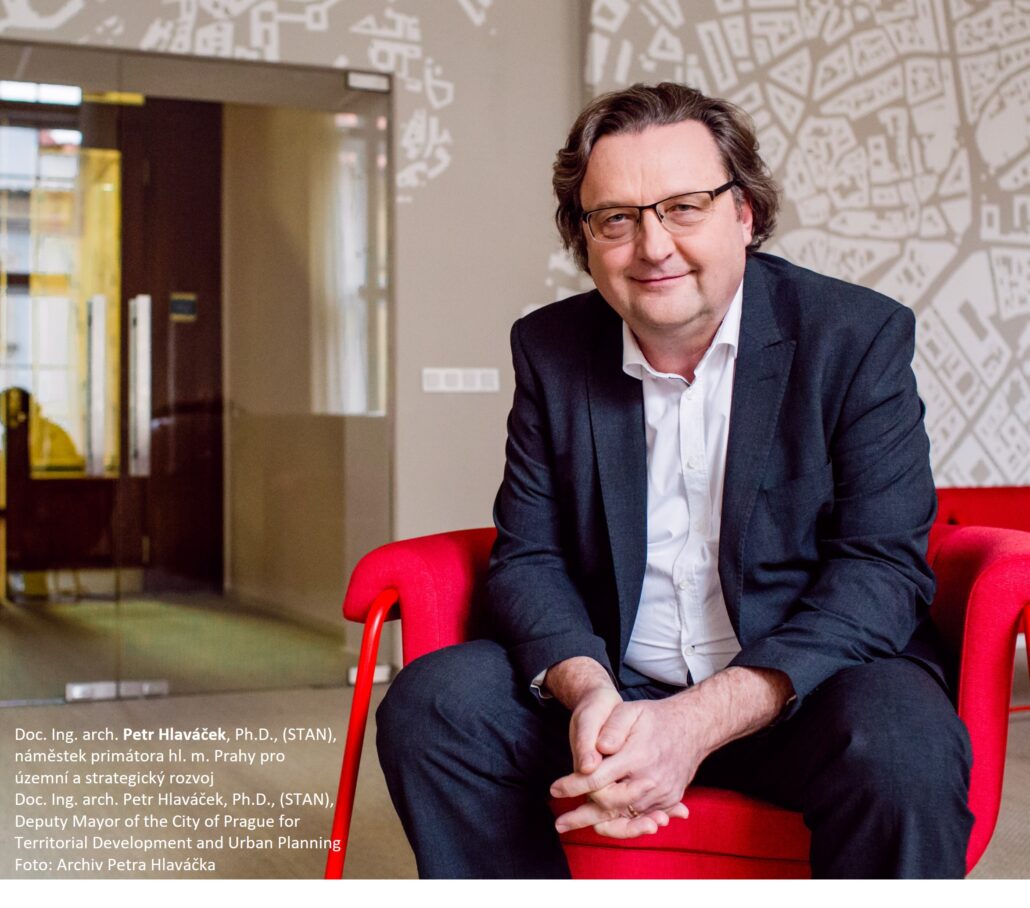 Petr Hlaváček became involved in the creation of the Metropolitan Plan some ten years ago – initially as Director of the Prague Institute of Planning and Development and subsequently as a politician, from 2018 to 2023 as the First Deputy Mayor, and since 2023 as the Deputy Mayor of the City of Prague for Territorial Development and Urban Planning. He was therefore involved in virtually all the key stages in the creation of this document. For him personally, the completion of the zoning plan primarily represents the culmination of many years of work done by a large number of people involved in hundreds, perhaps thousands, of hours of discussions and efforts to find compromises throughout institutions, city districts and the political spectrum. “As a result, we now have a document that enjoys an exceptionally broad consensus and aims to move Prague forward and facilitate its further development,” Petr Hlaváček says in an interview with Development News.
How will the Metropolitan Plan affect life in the city?
In simple terms, the plan will allow the city to become denser within its boundaries, particularly on brownfield sites, and at the same time protect the greenery and landscape around the metropolis. This will make it possible to create high-quality neighbourhoods and short-commute cities where one can find everything – housing, services and public transport – easily accessible. What is also important is the fact that the plan defines more clearly where and how to construction, including the character of development and maximum number of storeys. At the same time, it is a modern, fully digitalized document that creates the conditions for faster and more predictable urban planning. However, its real significance will not lie in its approval itself – what will matter is whether Prague actually continues with developing activities consistently on its basis over the coming decades.
When might we see the first visible changes?
The Metropolitan Plan gives Prague clear, long-term development regulations for roughly the next 30 years. Brownfield sites will provide residents with new neighbourhoods with housing, schools, parks and services within walking distance, while 82% of new development is planned near underground stations, tram lines or railway lines. This provides investors and developers with greater legal certainty and more predictable conditions, particularly thanks to clearly defined development areas and regulations governing their transformation. What is also crucial is that the plan coordinates housing development with key transport infrastructure – it takes into account the D underground line, new tram lines, the city ring road as well as Prague ring road and high-speed railway, while at the same time protecting Prague’s historic character and green spaces. The first changes will be reflected almost immediately in the permitting and preparation of projects, while new districts will emerge gradually in the horizon of upcoming years and decades.


 Builders have long complained about the length of approval procedures. Are better times finally ahead of us?
Yes, but I am a cautious optimist. The Metropolitan Plan also introduces a more predictable system for large brownfield sites, when development is linked to planning agreements with the city and individual city districts, so that lengthy negotiations such as those seen in the past are not repeated. However, it is fair to say that the plan itself is not a cure-all. We had to create a highly sophisticated system of regulations because it is eventually an independent building authority that decides about specific permits.
What is the city’s strategy for ensuring that the newly created districts are vibrant and well-accessible? Is it successful?
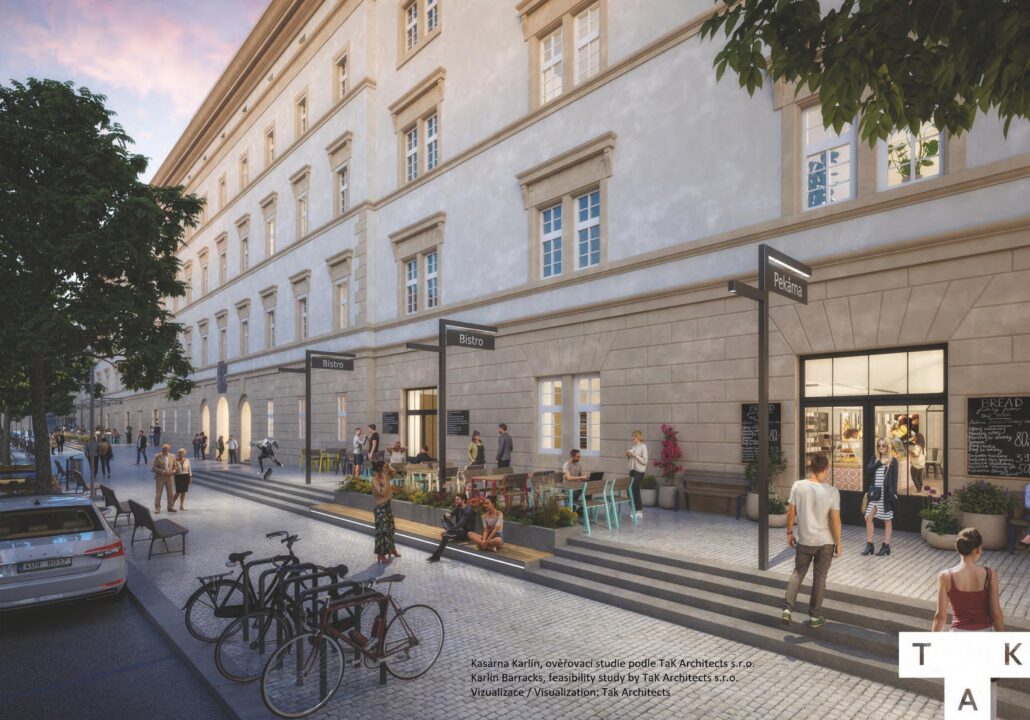
As I have already mentioned, our long-term strategy is to transform Prague’s brownfield sites into multifunctional, short-commute districts where housing, schools, parks, services and job opportunities are within walking distance and connected to the underground, trams or railways. The Metropolitan Plan therefore prioritises increasing the city’s density within its existing boundaries rather than expanding development into the surrounding landscape, while also protecting green spaces and the green belt around Prague. As for the large areas such as Bubny-Zátory, Smíchov, Nákladové nádraží Žižkov, Letňany and Vysočany, it also establishes how they are to be served by transport infrastructure. And yes, we are successful in promoting this approach – for instance, Smíchov, Rohan and Nákladové nádraží Žižkov are already being developed, while other major areas now have a framework for gradual transformation thanks to the Metropolitan Plan.
One of the problems that most European capitals are facing is the lack of affordable housing. What is your solution?
My solution is not to regulate demand, but to significantly increase the supply of high-quality municipal rental housing. We are therefore preparing, through the Prague City Development Company, new districts situated on city-owned land and brownfield sites that should provide thousands of apartments connected to public transport, schools and civic amenities. And it is the municipal rental housing that should help keep the middle class and key professions, without which the city cannot function, in Prague. This approach is repeatedly described in documents concerning the development of Prague’s brownfield sites and municipal housing.
European cities, including Prague, are increasingly facing pressure to decarbonise and adapt to climate change. How does the Metropolitan Plan connect the development of major transport infrastructure with blue-green infrastructure and measures to combat urban heat islands?
It connects the two by concentrating most new development around the underground, tram and railway connections, which should reduce the long-term burden caused by car traffic. In terms of blue-green infrastructure, it significantly strengthens the protection of urban parks, greenery in housing estates and the green belt around Prague, while defining specific types of landscape and green areas as an integral and binding part of development. The aim is for new transport investments not to be developed in isolation, but together with high-quality public spaces, greenery and measures that improve the city’s microclimate.

 If you look at Prague in the horizon of 2050, which urban-development interventions will change its appearance and functioning the most?
I believe there are three things that will transform Prague the most by 2050. First, the transformation of brownfield sites such as Bubny, Smíchov, Žižkov and Vysočany into vibrant and functional districts. Second, the creation of a backbone rail transport network – the D underground line, new tram lines and the metropolitan express system (S underground line) – which will fundamentally change the way people move around the city. And third, the transformation of Prague’s northern centre around the Vltava Philharmonic Hall, where culture, high-quality public space, the river and a modern transport hub will come together in order to create a new urban district.
You mentioned the Vltava Philharmonic Hall. What will this project bring to the capital and to the Czech Republic?
The Vltava Philharmonic Hall is not just a concert hall, but a new cultural and urban centre for Prague. It is a key part of the transformation of the Bubny-Zátory area and, together with the redevelopment of the Vltavská transport hub, will create a new gateway to Holešovice, connecting the river, Letná and the newly emerging district. It will have a strong socio-economic impact on Holešovice – it will support the creation of a vibrant multifunctional district with culture, services, job opportunities and high-quality public space. On a broader scale, it is also intended to become a symbol of the modern Czech Republic and one of the key projects shaping the transformation of Prague’s northern centre.
What stage is it at?
We have completed the documentation for the project permit and submitted the relevant application at the end of August. We expect to obtain the permit in the first quarter of 2027, with construction itself scheduled to begin in the first quarter of 2028.
Jana Hrabětová